
If you live in St. Paul, Minnesota, you know that water is both a blessing and a curse. While we love our proximity to the Mississippi River and our “Land of 10,000 Lakes” identity, that same water becomes a relentless adversary when it tries to enter our homes. For many homeowners in Ramsey County, a damp basement is seen as an inevitable part of living in an older home. But the truth is, a wet basement is more than just a nuisance—it is a threat to your home’s structural integrity and your family’s health.
The key to a dry, usable lower level isn’t just mopping up after a storm; it’s about a professional approach to basement waterproofing St. Paul, MN. Understanding why our basements leak and how to stop them permanently is the first step in reclaiming your home’s square footage.
The Perfect Storm: Why St. Paul Basements Leak
St. Paul’s geography and climate create a unique set of challenges for residential foundations. Several factors converge to push water into your living space:
1. The “Clay Bowl” Effect
Much of the soil in the Twin Cities is rich in clay. When contractors build a house, they dig a hole larger than the foundation, build the walls, and then backfill the gap with loose soil. This backfilled soil is more porous than the undisturbed virgin clay surrounding it. When it rains, this pocket acts like a bowl, trapping water directly against your foundation walls.
2. Hydrostatic Pressure
As the “clay bowl” fills with water, the weight of that water creates immense pressure. This is called hydrostatic pressure. It forces moisture through the microscopic pores of concrete blocks and pushes liquid water through even the tiniest cracks in your floor or walls.
3. The Freeze-Thaw Cycle
Our brutal Minnesota winters play a major role. When the ground freezes, it expands. When it thaws in the spring, it creates voids and channels for meltwater to flow directly toward your basement. This cycle eventually fatigues concrete, leading to the cracks that allow water to seep in.
Warning Signs: Is Your Basement Secretly Wet?
Not every wet basement has standing water. Sometimes the signs are subtle, but they are just as dangerous:
- Efflorescence: Have you noticed a white, powdery substance on your brick or concrete walls? That’s salt left behind when water evaporates. It’s a “smoking gun” that moisture is migrating through your walls.
- Musty Odors: That classic “old basement smell” is actually the scent of mold and mildew colonies growing in dark, damp crevices.
- Peeling Paint or Wallpaper: If your basement finish is bubbling or flaking, moisture is likely trapped behind the surface.
- Rusty Metal: Check the base of your furnace, water heater, or even old nails in the baseboards. Rust is a clear indicator of high humidity levels.
The Multi-Layered Approach to Waterproofing
Effective waterproofing isn’t a single product; it’s a system. A professional solution typically involves both interior and exterior strategies to manage water flow.
Interior Drainage Systems
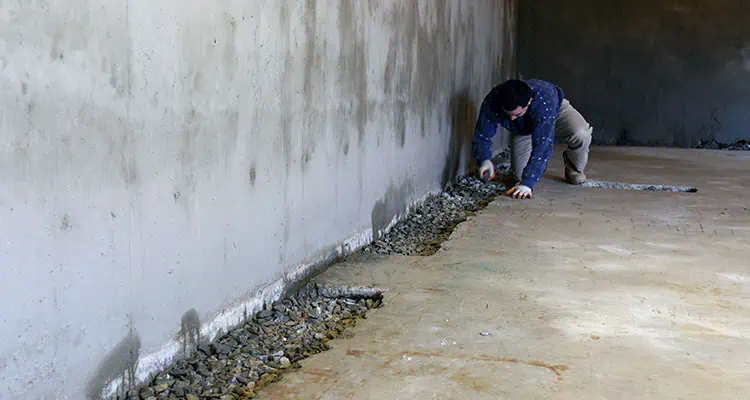
The most common and effective method for St. Paul homes is an interior drainage system. This involves creating a trench along the perimeter of the basement floor, installing a perforated drain pipe, and covering it with decorative stone. This system intercepts water before it ever reaches your floor and directs it to a sump pump.
High-Capacity Sump Pumps
A drainage system is only as good as its exit point. In Minnesota, where spring snowmelt can be sudden and massive, you need a industrial-grade sump pump. Many homeowners also opt for battery-backed secondary pumps to ensure protection even if a spring storm knocks out the power.
Vapor Barriers and Wall Shields
To handle “weeping” walls, heavy-duty plastic vapor barriers are installed. These sheets direct any moisture that seeps through the walls down into the interior drainage system, keeping the basement air dry and the walls looking clean.
The Hidden Benefits: Why Invest in Waterproofing Now?
While the primary goal is a dry floor, the secondary benefits of basement waterproofing are arguably more valuable in the long run.
1. Reclaiming Living Space
With a guaranteed dry basement, you can finally finish that guest suite, home office, or gym. In a competitive real estate market like St. Paul, adding functional square footage is the fastest way to increase your home’s appraisal value.
2. Preventing Mold and Improving Air Quality
Up to 50% of the air you breathe on the first floor of your home comes from the basement (the “stack effect”). If your basement is damp and moldy, your family is breathing those spores. Waterproofing creates a healthier environment for everyone, especially those with allergies or asthma.
3. Protecting Your Foundation
Water is the primary cause of foundation failure. By managing the water and relieving hydrostatic pressure, you are effectively extending the life of your home’s structural “bones.”
Why “DIY” Waterproofing Usually Fails
It’s tempting to buy a bucket of “waterproof paint” from a big-box store and call it a day. However, these coatings are often just a temporary bandage. Hydrostatic pressure is strong enough to peel paint right off the wall. True waterproofing requires redirecting the water, not just trying to block it with a thin layer of chemicals.
In St. Paul, where the water table can shift significantly, you need a system designed for our specific soil types. Professional installers understand the local codes and the unique architectural quirks of our historic neighborhoods.
Conclusion: Take Control of Your Home’s Environment
A wet basement is a problem that only gets worse with time. Every rainstorm and every winter freeze causes more damage to your walls and your belongings. By investing in professional basement waterproofing St. Paul, MN, you aren’t just buying a pump or a pipe—you are buying peace of mind.
Imagine the next heavy spring downpour. Instead of rushing to the basement with a shop-vac, you can sleep soundly knowing your waterproofing system is silently and efficiently keeping your home bone-dry. Don’t wait for the next flood to take action.


